Aldermore Buy to Let Maximum Loan Size: Up to £1,000,000 Per Property Explained
What the Hard Limits Actually Are
Aldermore sets a maximum loan size of £1,000,000 on a single buy to let property. If you hold multiple properties financed through Aldermore, the aggregate borrowing cap sits at £3,000,000. Those two numbers matter before anything else, because if your purchase price or remortgage requirement pushes past £1,000,000 on a single title, you are looking at the wrong lender regardless of how clean your portfolio is.
The minimum loan size is £25,001, so very low-value terraces financed at high LTV are where you might brush that floor.
LTV Ceilings and How They Shape Your Maximum
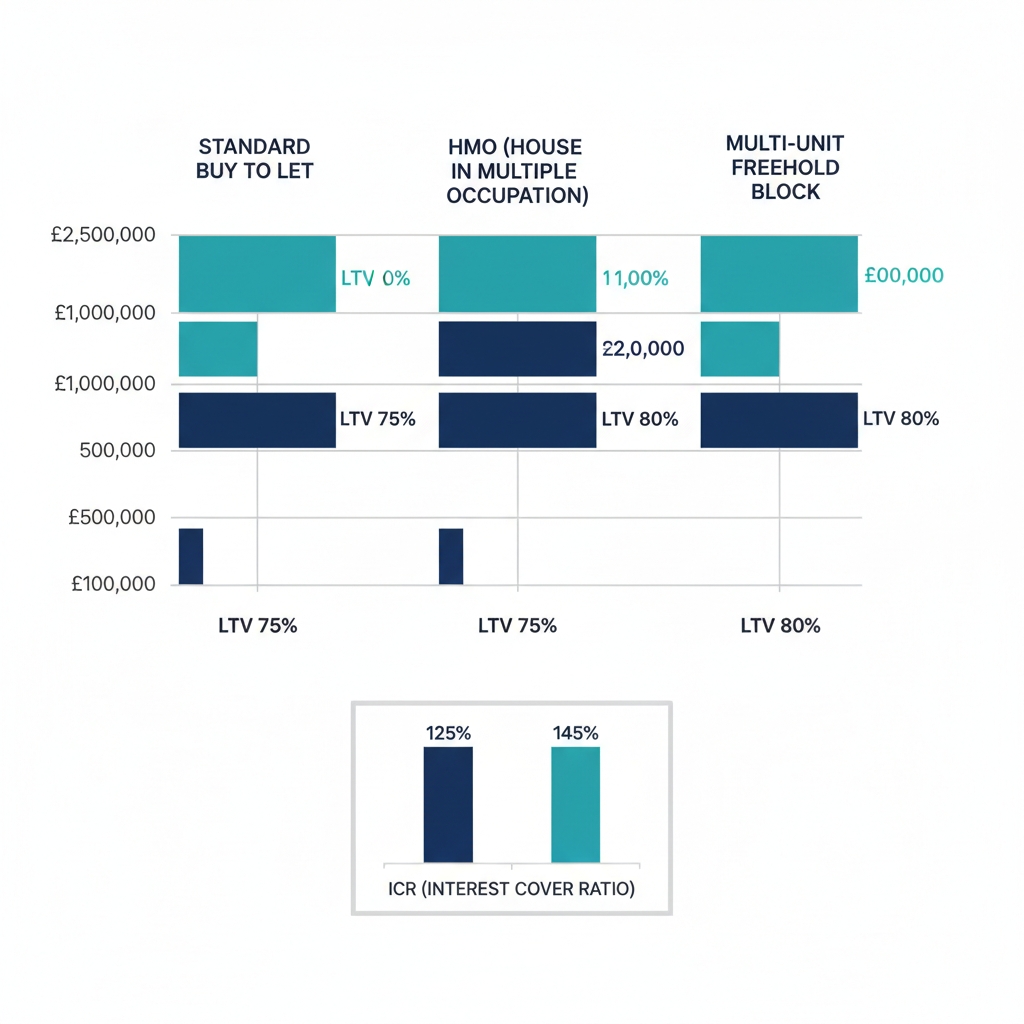
The maximum loan-to-value on a standard Aldermore buy to let mortgage is 75%. That single figure does more work than most landlords realise, because it means the maximum £1,000,000 loan only becomes available on a property valued at £1,333,334 or above.
On houses in multiple occupation (HMOs) and multi-unit freehold blocks (MUFBs), Aldermore drops the LTV ceiling to 70%, which tightens the effective maximum. On a property valued at £1,000,000, 70% LTV delivers a £700,000 loan — a meaningful difference if you are refinancing to release capital.
Minimum Income and Rental Cover Requirements
Aldermore requires a minimum personal income of £25,000 per year for employed applicants using their buy to let range. For the self-employed the same £25,000 threshold applies, based on two years' accounts or SA302s.
Rental stress testing is where the maximum loan is genuinely constrained for many landlords. Aldermore stress tests at a notional rate rather than the pay rate. For standard buy to let applications, the interest coverage ratio (ICR) requirement is 125% at a stress rate that typically sits around 5.50%, though this shifts with the lender's own product review cycle. For higher or additional rate taxpayers, the ICR rises to 145%. Run the numbers: on a property achieving £3,000 per month in rent, the 145% ICR at 5.50% stress produces a maximum loan of roughly £665,000 — well below the £1,000,000 headline cap for many mid-tier London assets.
Portfolio Landlord Rules: Where Aldermore Differs
Aldermore will lend to portfolio landlords — defined under PRA guidelines as those with 4 or more mortgaged buy to let properties. At this point the underwriting becomes more thorough. Aldermore requires a full portfolio schedule showing all properties, all mortgages, outstanding balances and current rental income. They also want evidence that your existing portfolio carries an overall ICR of at least 125%.
The £3,000,000 aggregate cap applies across your entire Aldermore exposure, not just new borrowing. If you already hold £2,500,000 with them, your next application is limited to £500,000 regardless of the individual property value. That ceiling is firm and does not flex for strong portfolios.
Property Types That Affect the Maximum
Not every property qualifies for the full £1,000,000. Aldermore publishes acceptable property criteria that affect both LTV and, by extension, the effective loan ceiling:
- Standard single self-contained units — eligible up to 75% LTV and the £1,000,000 cap.
- HMOs up to 6 bedrooms — eligible up to 70% LTV. Larger HMOs above 6 bedrooms are reviewed on a case-by-case basis and may not qualify at all.
- Multi-unit freehold blocks up to 10 units — eligible up to 70% LTV, subject to the aggregate exposure limit.
- New build flats — Aldermore applies a reduced maximum LTV of 65% on new build flats, which compresses the effective maximum loan significantly on high-value city-centre apartments.
- Ex-local authority flats — acceptable but capped at 70% LTV and subject to location and block size criteria.
A new build flat valued at £800,000 hits a 65% LTV ceiling, meaning the maximum loan is £520,000 — roughly half the headline figure.
Fees, Arrangement Costs and How They Interact With Loan Size
Aldermore charges arrangement fees that typically range from 1.50% to 3.00% of the loan amount depending on the product tier selected. On a £1,000,000 loan, a 2% fee is £20,000 — and you need to decide whether that is being added to the loan or paid upfront, because adding it takes your total borrowing to £1,020,000, which breaches the £1,000,000 per property limit.
This is a practical issue that catches landlords off guard. If you are targeting the absolute maximum loan size, you must pay the arrangement fee separately rather than adding it to the loan. Valuation fees on properties at this price point typically start at £600 and rise with property value and location complexity.
How Aldermore Stacks Up for High-Value BTL
Aldermore is not a natural fit for prime central London or high-value Home Counties purchases above £1,333,334 where 75% LTV and £1,000,000 are both needed simultaneously. In those cases, specialist lenders with higher individual property limits — some cap at £3,000,000 or £5,000,000 per property — will suit better.
Where Aldermore does work well is for portfolio landlords building across provincial cities, accumulating mid-market assets between £150,000 and £800,000, often with a mix of standard lets, HMOs and small MUFBs. The £3,000,000 aggregate limit is workable across a 5–8 property portfolio in that price band, and their willingness to consider complex income structures for the self-employed at the £25,000 threshold keeps them relevant.
Checking Your Numbers Before You Apply
Before submitting to Aldermore, confirm three things: the individual property loan does not exceed £1,000,000; your aggregate Aldermore exposure stays below £3,000,000; and your rental income clears the ICR at 125% or 145% depending on your tax position when stress tested at approximately 5.50%.
Get a current mortgage statement for every property in your portfolio — Aldermore will ask for it, and missing documents at application stage routinely adds 2–3 weeks to a decision timeline.