Paragon Buy to Let Mortgage Criteria: Your Route Guide
Paragon is one of the few specialist lenders that actively wants portfolio landlords on its books. While high-street banks often start backing away once you hold four or more mortgaged properties, Paragon treats a larger portfolio as a sign of experience rather than a red flag. That distinction matters when you're trying to grow past the thresholds that shut most mainstream doors.
Here is a structured route through the key criteria so you can assess fit before you spend time on a full application.
Who Paragon Will Lend To
Paragon lends to individuals, limited companies, limited liability partnerships and trustees. It accepts first-time landlords on standard residential BTL cases, though its appetite for more complex deals — HMOs, multi-unit freehold blocks, short-term lets — is stronger with experienced operators.
For limited company applications, Paragon will lend to Special Purpose Vehicles (SPVs) with SIC codes 68100, 68201 or 68209. It does not lend to trading companies that happen to hold property on the side. The company must have been incorporated specifically for property investment purposes. Director guarantees are required and Paragon typically expects at least 1 director to hold a minimum 25% shareholding in the entity.
Minimum and Maximum Loan Sizes
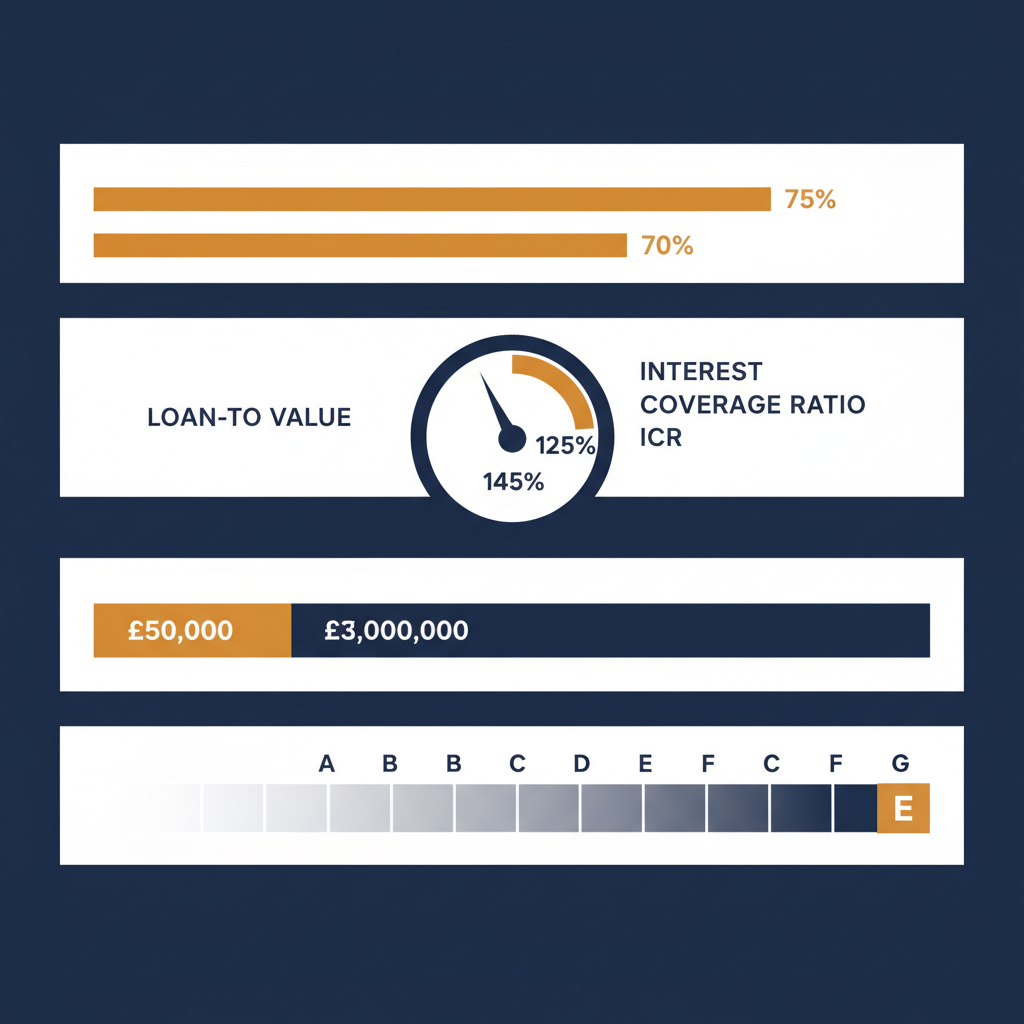
The minimum loan Paragon will consider on a standard buy to let is £50,000. The maximum single loan is £3,000,000, though aggregate exposure across your whole portfolio with Paragon can reach £10,000,000. If you are pushing toward that upper threshold, expect more detailed portfolio scrutiny — full background portfolio schedules, tenancy agreements and mortgage statements.
Deposit and Loan to Value
Paragon requires a minimum 25% deposit, which means the maximum LTV on a standard BTL is 75%. For HMOs and MUFBs (multi-unit freehold blocks), the maximum LTV drops to 70%, so factor in a 30% deposit minimum for those property types. Purpose-built student accommodation also sits at a 70% LTV cap.
Interest Coverage Ratio and Stress Testing
This is where Paragon differs from some competitors. The minimum ICR is 125% for basic rate taxpayers and 145% for higher or additional rate taxpayers, calculated against a stressed rate of 5.5%. That 5.5% stress rate applies regardless of what the actual pay rate is — so even if you are taking a 4.2% two-year fix, the lender is still underwriting as though the rate were 5.5%.
For limited company applicants, the ICR required is 125% at the same 5.5% stress rate. This is one reason SPV applications have become more common — the lower ICR threshold and tax treatment of mortgage interest make the numbers stack more easily inside a company.
Portfolio Landlord Requirements
Paragon defines a portfolio landlord as someone holding 4 or more mortgaged properties. Once you cross that threshold, the underwriting is more detailed, but Paragon genuinely underwrites it rather than declining it as many lenders do.
You will need to submit a full portfolio schedule covering all properties — owned outright and mortgaged — with current values, outstanding balances, monthly rent and monthly mortgage payments. Paragon also assesses the background portfolio's overall ICR and will want to see it broadly serviceable at 125% across the whole book, not just on the specific property being mortgaged. If you have a weak asset dragging the overall coverage down, address it before applying.
Property Types and Acceptable Tenancies
Paragon accepts standard AST tenancies, HMOs with up to 6 bedrooms on a standard product, and larger HMOs (7 or more rooms) on a specialist basis. MUFB properties of up to 10 units sit within the standard range; anything above that is considered on referral.
Properties on Airbnb or other short-term let platforms are not acceptable security for a Paragon BTL. The property must be let, or intended to be let, on a minimum 6-month AST. Holiday lets are outside the standard policy entirely.
Paragon will not lend on properties with a current EPC rating of F or G. With 2028 minimum EPC requirements looming for new tenancies, this is a Paragon policy that aligns with the regulatory direction of travel. If your property is rated D or below, factor upgrade costs into your figures early.
Rates and Fees
Paragon operates tiered pricing across LTV bands. As a benchmark, two-year fixed rates on a standard BTL at 65% LTV start from around 4.29%, while five-year fixes at the same LTV open from approximately 4.49%. Rates at 75% LTV carry a premium of around 0.20%–0.35% depending on product.
Arrangement fees are typically 2% of the loan amount on standard products, though Paragon also offers lower-fee products with a slightly higher rate — useful if you are doing a short-term refinance and want to minimise upfront outlay. Valuation fees are charged separately and vary by property value, typically £300–£600 for a standard property up to £500,000.
There is no higher lending charge (HLC) on Paragon's standard BTL range up to 75% LTV.
Application and Underwriting Process
Paragon is intermediary-only — you cannot apply direct. You need to go through a mortgage broker who is registered with Paragon's intermediary portal. Paragon does its own in-house underwriting with named underwriters per case, which means you can have actual conversations about unusual cases rather than going through automated decline systems.
Decision in principle turnarounds are typically 24–48 hours for straightforward cases. Full application to formal mortgage offer averages around 3–4 weeks, but complex portfolio cases or properties requiring specialist valuation will take longer. Submit your portfolio schedule, last 3 months' bank statements and SA302s (or company accounts for SPVs) upfront — incomplete packs are the single biggest source of delay in Paragon applications.
The Paragon Advantage for Growing Portfolios
For landlords with 6, 8 or 10+ properties, Paragon's willingness to underwrite portfolio cases properly — rather than capping exposure at 4 properties like many mainstream lenders — is genuinely useful. Combined with the SPV lending, HMO appetite and named underwriters, it is a lender worth building a relationship with as your portfolio scales.