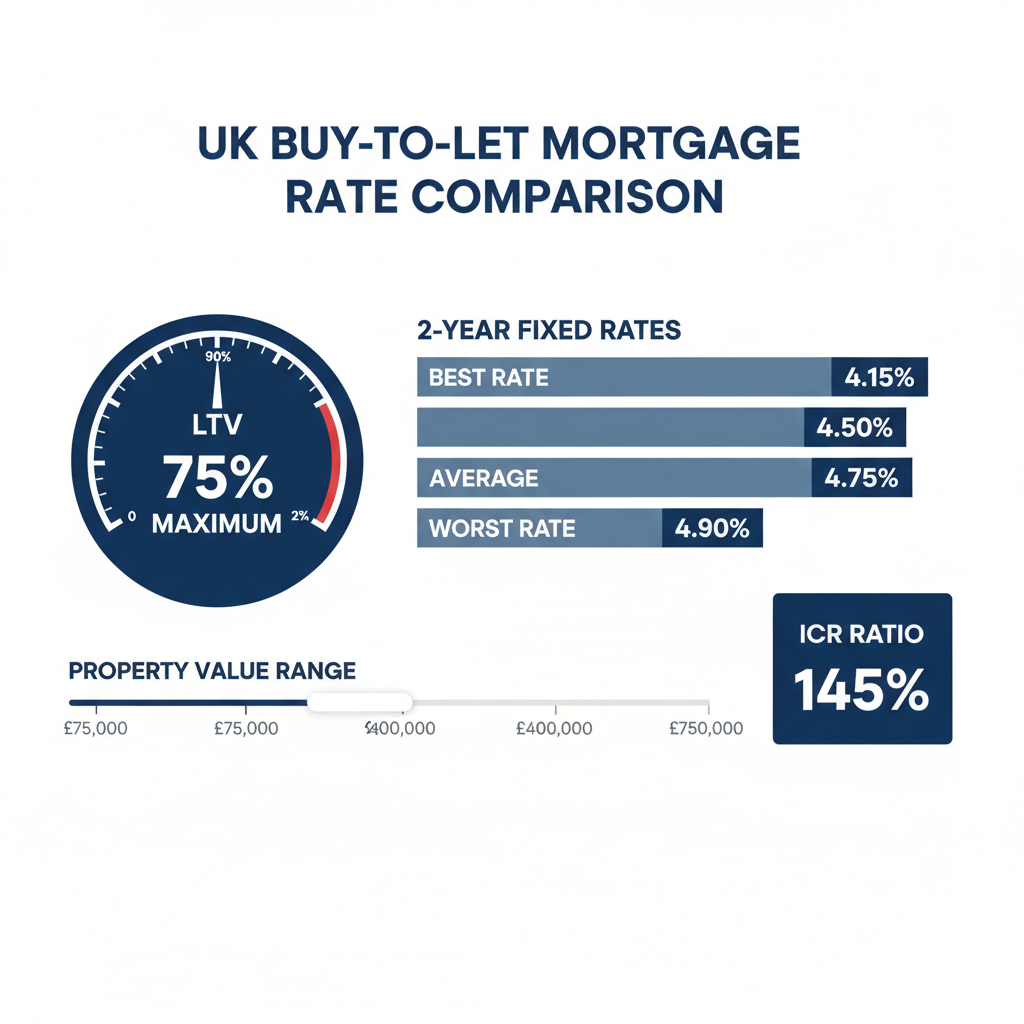
A 75% LTV ceiling. That single threshold shapes every conversation about TSB buy to let mortgage rates before a landlord even gets to the rate card.
TSB re-entered the buy to let market in 2022 after a prolonged absence, and its product range has been evolving steadily since. Right now, its residential-focused DNA is visible in the way the criteria are structured: tighter LTV limits, a preference for straightforward vanilla cases, and a pricing approach that occasionally surprises on the upside for the right borrower profile. This article audits what the current range actually looks like and what it means if you are building or refinancing a UK rental portfolio.
What the Numbers Show
TSB's buy to let range currently offers 2-year and 5-year fixed-rate products, with the most competitive pricing sitting in the 5-year fixed bracket. On a standard 75% LTV purchase, 5-year fixes have been available in the range of 4.79% to 5.49%, depending on the product fee selected. The lower end of that range typically comes attached to a £1,995 arrangement fee. The fee-free equivalent sits closer to 5.49%, a gap of approximately 70 basis points — meaningful on larger loans but potentially inefficient on anything below £150,000.
The 2-year fixed options are priced higher than their 5-year counterparts, reflecting the current inverted yield curve dynamic that has persisted since late 2022. On equivalent LTV, 2-year fixes have been running at approximately 5.29% to 5.89%, again with fee differentials built in. This is not unusual for the broader market, but it does mean that landlords who default to shorter fixes on habit should run the numbers carefully before assuming they are saving money.
The minimum loan size is £25,000 and the maximum sits at £750,000 for a single property. That upper cap is a meaningful constraint for landlords targeting higher-value stock in London and the South East, where average terraced house prices in areas like Richmond or Wandsworth regularly exceed £900,000. TSB is not the lender for a £1.2 million HMO refinance in zone 2.
Rental coverage is assessed at 145% of the monthly mortgage payment, calculated at the product pay rate for 5-year fixes, or at a stressed rate for shorter-term products. That 145% ICR threshold is in line with most high-street lenders targeting basic-rate taxpayers, but landlords paying higher-rate tax will find the affordability calculation tightens further under TSB's approach.
Eligible property types are relatively conventional: standard single self-contained units, flats, and terraced or semi-detached houses. TSB does not currently lend on HMOs, multi-unit freehold blocks, holiday lets, or properties above commercial premises. Minimum property value is £75,000.
What This Means for Landlords
For the professional portfolio landlord — someone running 10 or more properties with a mix of structures — TSB buy to let mortgage rates will rarely represent the first call. The 75% LTV cap, the £750,000 single-property ceiling, and the exclusion of specialist property types mean TSB is structuring its buy to let offering around the accidental or small-scale landlord rather than the deliberate portfolio builder.
That said, there are specific scenarios where TSB's pricing becomes genuinely competitive. A landlord with a clean vanilla property worth £200,000, no outstanding portfolio complexity, and a preference for a 5-year fix will find TSB's rates sit within 20 to 30 basis points of the cheapest comparable products on the market — and the lender's service levels have historically been strong, which matters when a purchase chain has a fixed deadline.
The £1,995 fee structure rewards larger loans. On a £200,000 mortgage, that fee equates to roughly 1% of the loan — acceptable but not exceptional. On a £400,000 refinance, the same fee drops to under 0.5%, at which point the lower rate it buys becomes considerably more efficient over a 5-year term. Run the total cost of credit over 60 months, not just the headline rate.
For landlords considering limited company buy to let, TSB does not currently offer lending to Special Purpose Vehicles or trading companies. This is a significant structural point. With 45% of all new buy to let mortgages now being taken in limited company names — reflecting the Section 24 mortgage interest relief changes that took full effect from April 2020 — TSB's absence from this segment removes it from consideration for a large and growing share of the market. If your portfolio is structured through a limited company, TSB buy to let mortgage rates are not available to you.
The lender also applies a portfolio landlord definition at 4 or more mortgaged properties. Above that threshold, additional underwriting documentation is required: a business plan, an assets and liabilities statement, and full details of the existing portfolio. This is standard post-PRA regulation introduced in September 2017, but TSB's interpretation of the stress testing at portfolio level can be more conservative than specialist lenders such as Paragon or Fleet Mortgages.
Overpayments of up to 10% per annum are permitted without penalty on fixed-rate products, which is a useful feature for landlords who want to de-lever gradually without triggering early repayment charges. On a £300,000 mortgage, that 10% allowance equates to £30,000 of penalty-free capital repayment annually — not insignificant if rental income is strong and the strategy is to reduce LTV ahead of the next remortgage cycle.
One final point on product switching: TSB does allow existing buy to let customers to switch to a new deal without a full re-underwrite, provided the LTV position has not deteriorated. This product transfer option — typically available from 90 days before the current deal expires — removes valuation costs and can speed up the remortgage process considerably in a volatile rate environment.