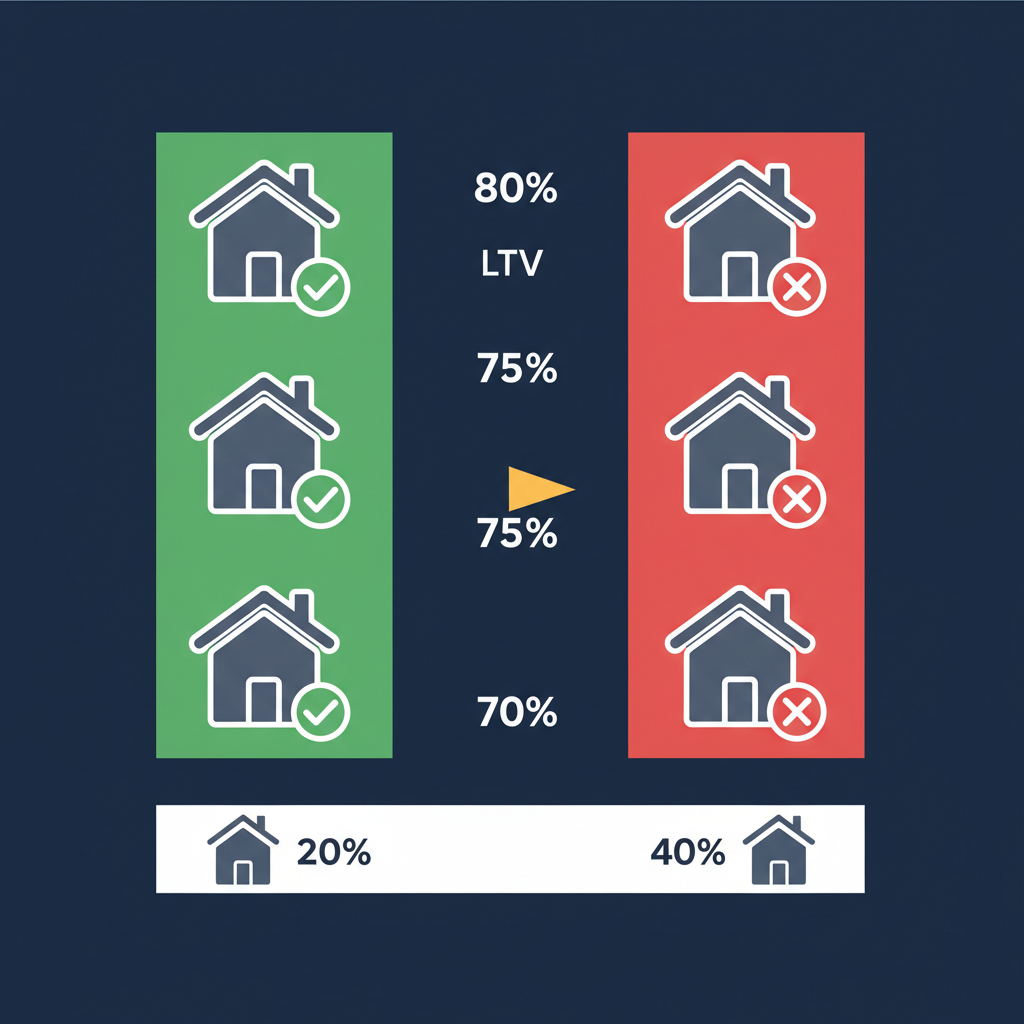
The Mortgage Works sets its first-time landlord maximum LTV at 80% — and that single figure is worth memorising, because it sits above almost every other lender's cap and opens up a wider deposit range than most newcomers expect. Before working through who will lend and on what terms, run through the three questions that determine where you stand.
Question one: do you own your home? The most common first-time-landlord criterion is that you already own your own home. A large part of the buy-to-let market will only lend to a first-time landlord who is an existing residential homeowner, on the logic that running a residential mortgage demonstrates you can manage secured borrowing.
Question two: what is your income? Many lenders apply an income floor — commonly around £25,000 a year — to show you could cover the mortgage through void periods or unexpected costs.
Question three: is this your first BTL? If the answer is yes, your choice of lender, maximum loan and acceptable property types all narrow immediately. Work out your answer to all three before approaching any lender.
What the Numbers Show
Aldermore's criteria guide sets out the first-time landlord position clearly: max loan £500,000, max LTV 75%, minimum age 25, minimum income £25,000, and a residency requirement — you must have been an owner-occupier for 12 months. That 12-month ownership rule is stricter than many other lenders and will catch anyone who has only recently completed on their home.
Barclays goes further in the other direction: first-time landlords are eligible to purchase a Barclays buy-to-let mortgage even if the applicant does not have any type of mortgage, does not own any background property, or has no experience. However, the applicant must have a minimum gross annual income of £25,000, excluding rent from background buy-to-lets, meaning the £25,000 must come from an acceptable source other than rental income. For joint applications, at least one applicant must earn £25,000. Barclays is one of a small number of high street names where a first-time buyer going straight into buy-to-let is a genuine option, not just a theoretical one.
The Mortgage Works accepts first-time landlords up to 80% LTV, with a maximum age of 75 at application on loans up to 70% LTV — an increase from 70, confirmed in September 2026. Loan size caps are tiered: up to £500,000 at 80% LTV, up to £750,000 at 70% LTV, and up to £1,000,000 at 50% LTV. No minimum income is published, but the ICR test still applies. The Mortgage Works requires 125% rental cover for basic-rate taxpayers and limited companies, and 160% for higher-rate taxpayers.
Metro Bank requires applicants to be owner-occupiers or experienced landlords, and specifies a minimum of one year of BTL experience. That rules out first-time landlords entirely on standard products. LendInvest is equally direct: none of the borrowers can be a first-time landlord. United Trust Bank takes a similar line — at least one applicant must have one year's letting experience.
Leeds Building Society accepts first-time landlords on standard buy-to-let products up to 75% LTV, but caps this at 70% LTV for first-time landlords on holiday lets. That distinction matters if you are weighing up a coastal or rural property. Pepper Money takes a broader approach: its buy-to-let mortgage criteria is designed to help all landlord customers, including first-time landlords, remortgaging or purchasing their next property, and it accepts first-time landlords where applicants are homeowners, with a minimum age of 21.
Foundation Home Loans defines a first-time landlord as someone who has not operated a BTL property within the last 12 months, and these applicants may apply as individuals or through limited companies. That limited company route matters post-Section 24: many new landlords are exploring SPV structures from day one.
What This Means for Landlords
First, understand the ICR test, because it will determine whether you can borrow enough on any given property regardless of which lender accepts you. Lenders require rental income to cover between 125% and 145% of the monthly mortgage interest, calculated at a stressed rate — typically 5.5% to 6% — rather than the actual rate on the mortgage. Higher-rate taxpayers in a personal name are usually assessed at 145%; basic-rate taxpayers at 125%; limited company applications at 125%. If you pay 40% income tax and are buying in your own name, that 145% hurdle is the one to model first.
The deposit requirement that appears in every lender's product guide is 25%, but the ICR stress test can push the real number higher. The majority of UK lenders ask for 25% on a buy-to-let in 2026, meaning you borrow up to 75% of the value. By the time a lender has run its rental coverage calculation at a stressed interest rate, plenty of perfectly good purchases only pass with 30% to 40% down.
Stamp duty is the cost that most first-time landlord budget calculations underestimate. In England and Northern Ireland, a buy-to-let or second property attracts the 5% additional dwellings surcharge on top of standard SDLT rates — the surcharge rose from 3% to 5% on 31 October 2024. Scotland has its own Additional Dwelling Supplement, currently set at 8%. Budget this before committing to a purchase price.
There is a specific trap for first-time buyers going straight into buy-to-let. If you purchase a buy-to-let before your own residential property, HMRC will not treat you as a first-time buyer for stamp duty relief purposes when you later buy a residential home to live in. The first-time buyer relief only applies when the homebuyer has never owned another property of any type. That is a permanent loss of relief worth thousands of pounds on a future purchase, and it is irreversible.
The keyword for this article is first-time landlord buy to let mortgage: lenders who'll accept you (and the ones who won't), and the split is clearer than most people assume: a handful of mainstream names will take you with no track record if your income and deposit stack up; a significant portion of the market will not move until you have 6 or 12 months of letting history behind you. Aldermore requires a minimum of 6 months between a completed first-time landlord application and the next submission, and defines an experienced landlord as one who has let a property for a minimum of 6 months.
Top-slicing — using personal income to make up a rent shortfall — is available at some lenders but not all. Accord offers top-slicing with a minimum non-rental income of £40,000 for experienced landlords or £75,000 for first-time landlords. The Mortgage Works, Leeds and Vida do not allow it. If the rent alone is marginal, the top-slicing lender list shrinks considerably for a first-time applicant.
The bottom line for anyone researching a first-time landlord buy to let mortgage: lenders who'll accept you (and the ones who won't): start with the three questions at the top of this piece, then map your answers to the lender criteria above. Barclays and The Mortgage Works are the most accessible high street and specialist options for those with no existing portfolio. Metro Bank, LendInvest and UTB require experience before they will consider you.