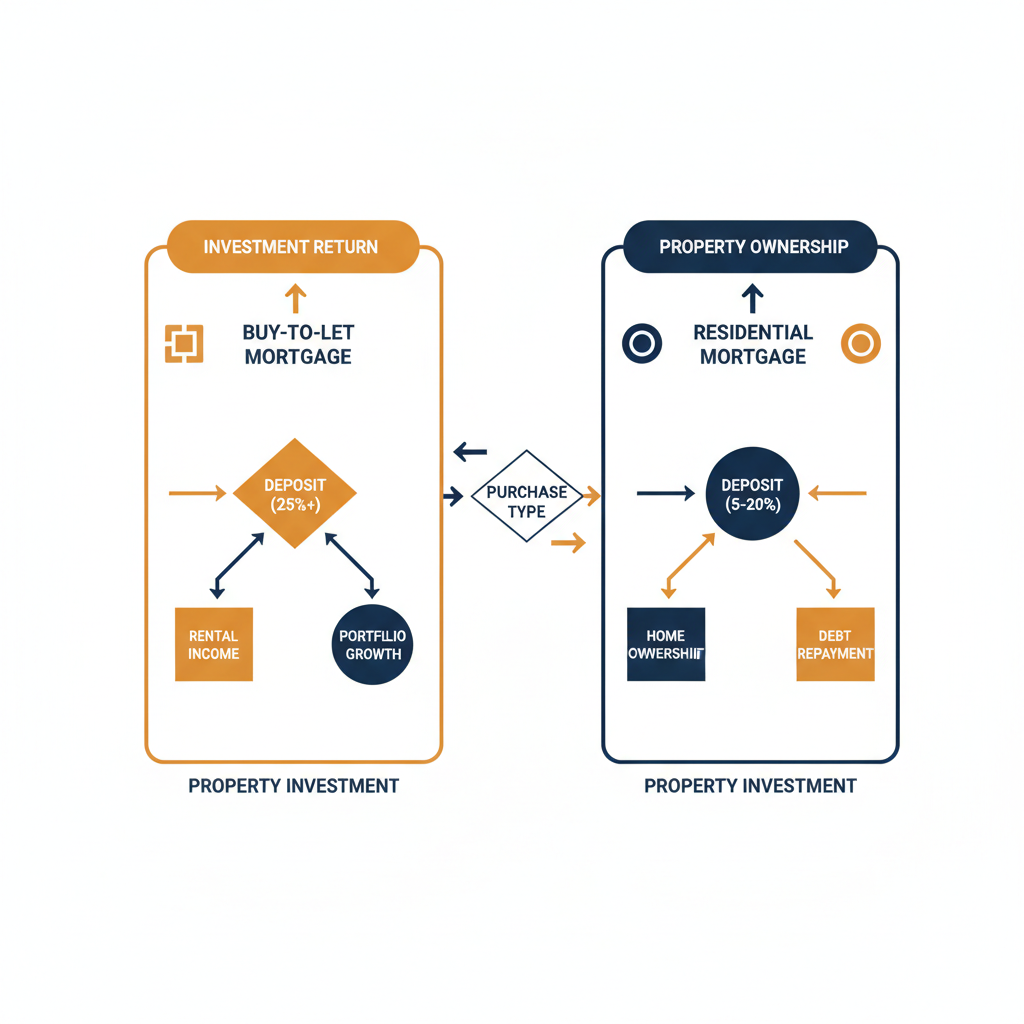
The Single Factor That Determines Which Foundation Product Fits Your Client
The key question is straightforward: is your client a landlord seeking higher-leverage buy-to-let finance, or a residential borrower with a complicated credit history? Foundation Home Loans has made targeted changes to both sides of its book, and the two sets of changes serve very different client profiles. Knowing which update applies to your case saves time and gets the right product in front of the right client.
When the Buy to Let Special Rate Makes Sense
If your client is a landlord and the loan sits at 80% LTV, Foundation's Buy to Let Special products are the relevant starting point following the rate reductions announced on 11th August 2026. The lender has specifically reduced pricing across this Special range at that LTV tier, which means borrowers pressing up to 80% LTV now have more competitive options than they did before that date.
The 80% LTV bracket is the defining criterion here. If your client's deal falls below that — at 75% or 65% LTV, for example — these specific reductions are not what you're pricing from. The Special product range targets the upper end of Foundation's LTV appetite for buy-to-let, so this update is most relevant for landlords who need to stretch their borrowing rather than those putting in a larger deposit.
Portfolio landlords placing complex cases through Foundation also benefit from the wider context: the lender has simultaneously been working on specialist case flexibility, as evidenced by the holiday let case in Burford, Oxfordshire that Foundation helped a broker complete. That case involved a holiday let and short-term let scenario, and Foundation positioned it as an example of how it handles investment property complexity. If your client's property is anything other than a standard AST rental — holiday let, short-term let, unusual location — Foundation's track record on that Oxfordshire case is worth noting.
When the Residential Criteria Enhancement Makes Sense
The 19th August 2026 announcement covers Foundation's residential side, not buy-to-let. The changes are aimed at borrowers who are rebuilding their financial position after historic credit issues. Foundation describes this as providing greater support to that borrower group, alongside more flexibility for brokers placing specialist residential cases.
This is the right conversation to have when your client has adverse credit in their history — missed payments, defaults, CCJs or similar — but is now in a more stable position. The residential criteria enhancements are specifically framed around historic issues, meaning the lender is signalling a willingness to look at where a borrower is now, not just where they were.
Brokers who regularly place non-standard residential cases will find the additional flexibility useful when standard lenders decline on credit history grounds alone. Foundation is not the only lender active in this space, but the August 2026 criteria changes represent a deliberate move to expand what it will consider.
The Calculation That Decides It
Three questions determine which update is relevant to your case.
First, is the property being purchased or refinanced for investment or personal occupation? If it is investment, the 11th August BTL Special rate reductions apply. If it is residential owner-occupied, look at the 19th August residential criteria changes.
Second, for buy-to-let cases, does the loan sit at 80% LTV? The rate reductions are specifically tied to that LTV point. A case below 80% LTV is not within the scope of these particular changes, though Foundation's broader BTL range remains available.
Third, for residential cases, does the borrower have historic credit issues? The 19th August enhancements are designed for that profile. A clean-credit residential borrower is unlikely to need the specific flexibility these changes were built to provide.
The Oxfordshire holiday let case is the clearest signal of what Foundation will attempt on the investment side. Burford is not a straightforward location, and a holiday let with short-term letting is not a vanilla BTL structure. If Foundation completed that case, it is worth approaching them on similarly complex investment property scenarios before assuming a decline.
The two announcements — one on 11th August, one on 19th August 2026 — are distinct products serving distinct client types. Running the three questions above takes 30 seconds and tells you whether Foundation is the right conversation for a given case.