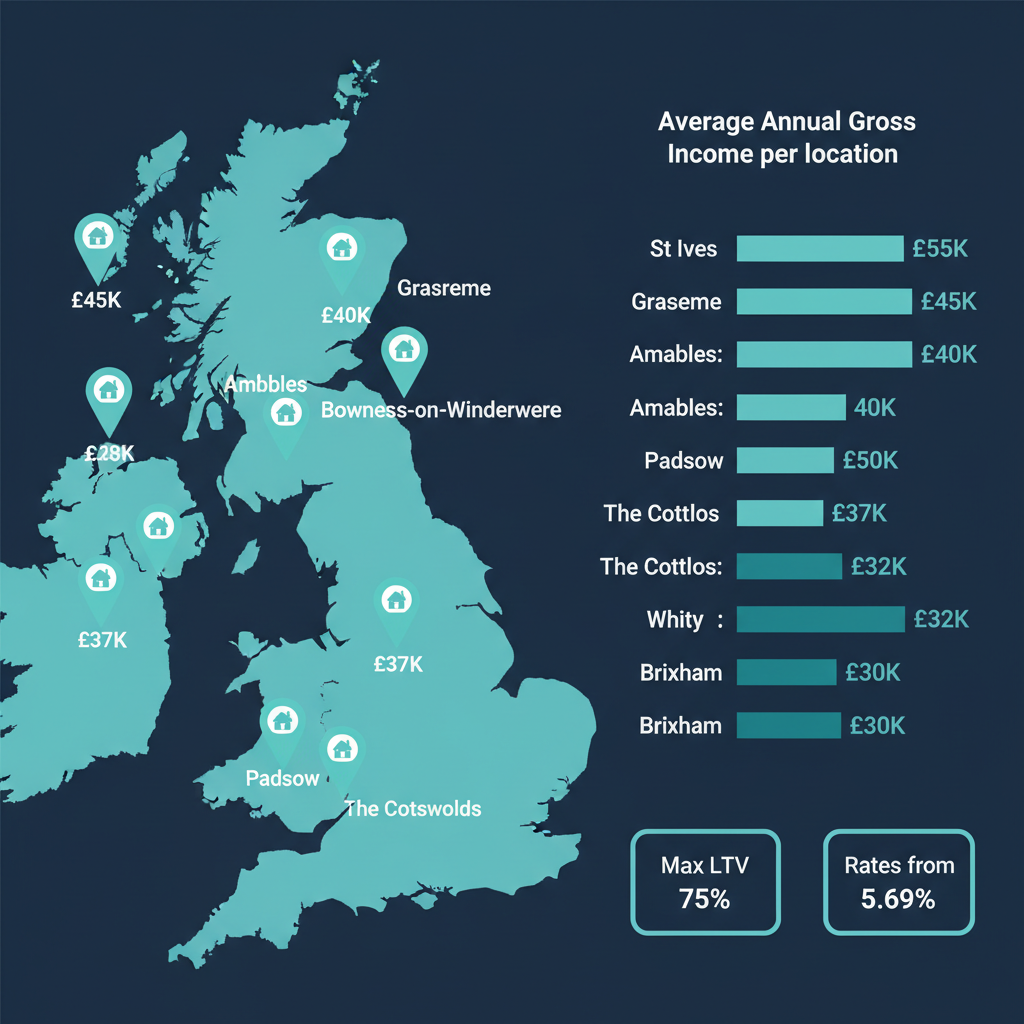
Grasmere in the Lake District generated an average holiday let income of £45,900 in 2025, up from £43,200 in 2024 and nearly £20,300 above the UK average of £25,600. That single figure tells you everything you need to know about why location selection is the one decision that cannot be undone after completion. If you are a portfolio landlord looking at where to deploy capital in holiday lets right now, this is the audit you need.
What the Numbers Show
The best towns to buy a holiday let in the UK split cleanly into three tiers: Lake District villages leading on gross income, Cornish coastal towns delivering strong year-round demand, and Yorkshire heritage towns offering lower entry prices with improving occupancy.
Bowness-on-Windermere generated £36,200, Ambleside £34,800, and Castleton in the Peak District £38,200 in 2025 — all among the top-performing locations nationally, reflecting sustained demand for countryside and year-round attractions. AirDNA's September 2026 market averages for the Lake District show approximately £32,000 of revenue per active listing per year, with roughly 58% of nights booked at an average nightly rate of around £195.
Cornwall is the counterweight to the Lakes on sheer volume of demand. Most holiday let owners in Cornwall earn between £18,000 and £45,000 in gross annual income, with AirDNA's 2025 data showing average annual earnings ranging from £26,000 to £35,000 across Cornwall's main destinations. Padstow averages £31,200 and St Ives £31,600 per year in gross revenue. St Ives runs at 56% occupancy with an average daily rate of £188, producing £38,243 in annual revenue across the GuestFavorites 2026 dataset. That is a strong risk-adjusted case for a coastal asset, provided you are buying in the right postcode.
St Ives draws nearly 760,000 visitors annually, and the market remains highly competitive due to limited housing stock and continued visitor numbers — particularly for coastal properties with sea views. Entry-level pricing matters here. Smaller properties close to the harbour often price in the £200,000–£300,000 range, though premium homes rise steeply above that.
Whitby is the yield story for Yorkshire investors. Whitby runs at 54% occupancy with an average daily rate of £162, producing £31,935 in annual revenue. The town combines heritage tourism with consistent seasonal occupancy, backed by a resident population of approximately 13,129. Solo staycations surged by 28% in 2024, with Whitby, Keswick, and Ambleside listed as the most popular destinations for that segment. That is a demand driver worth noting — the solo travel market is disproportionately loyal to destination and tends to book shoulder weeks that couples and families do not.
Brixham in Devon saw bookings rise by 62% year-on-year, making it the fastest-growing holiday let market according to Sykes Holiday Cottages' Staycation Index, compiled from 22,500 properties. Teignmouth in Devon saw a 32% surge in bookings, with properties around £200,000 potentially earning £25,000 annually.
The Cotswolds remains the premium-income outlier. Properties in the region average £504,000 at entry, but attract affluent holidaymakers willing to pay premium rates, with average revenue of around £33,000 per year driven by high occupancy during peak periods.
Accepting short breaks and multiple bookings per week generates 25% more revenue on average. Pet-friendly properties secure 16% more income, and homes with hot tubs can earn up to 40% more annually. These are not marginal gains — on a £32,000 baseline, a hot tub alone can push gross revenue to approximately £44,800.
What This Means for Landlords
Mortgage access is the constraint that turns a good location into a fundable deal. Holiday let mortgage rates start from 5.69% at 65% LTV (Keystone Property Finance, verified 1 October 2026), with the typical range sitting between 5.69% and 7.5%. Holiday let mortgage rates in 2026 run approximately 1 to 2 percentage points above equivalent buy-to-let rates, reflecting the higher perceived risk from seasonal rental income and the smaller pool of lenders willing to offer this product.
Cumberland Building Society cut 0.20% across its core holiday let fixed rate range from 2 December 2025, taking its 2-year and 5-year fixed rates from 4.98% to 4.78%. The updated products carry a £999 fee and are available for both purchases and remortgages. Cumberland lends up to 75% LTV, with a minimum property value of £150,000 and a maximum single loan of £2m.
Cumberland's rental coverage requirement is a minimum of 145% of the annual mortgage interest — calculated using the product rate — after a 20% deduction from gross rent for letting agent costs. On a 5-year fixed rate product at 4.78%, the minimum annual net rental income needed to support a £300,000 loan is: £300,000 × 4.78% × 145% ÷ 0.80 = approximately £26,000 per year. That is achievable in Grasmere, Ambleside, and the better Cornish postcodes — but not guaranteed in every coastal village.
Building society lenders including Cumberland, Leeds, and Furness typically use the open market 12-month AST comparable rent at 145% ICR and a 5.5% stress rate on personal name applications — or 125% ICR at 5.5% for limited company borrowers. The limited company route therefore unlocks materially more borrowing capacity on the same property and rental income, which matters in high-value markets like the Cotswolds and Ambleside.
Most lenders want to see a minimum personal income of £25,000 to £40,000, independent of rental earnings. Premium holiday let locations — specifically the Lake District, Cornwall, and Edinburgh — attract the best rates, while urban or non-premium locations carry a 0.3% to 0.8% pricing premium. That spread is wide enough to move the ICR calculation from pass to fail in a borderline case, so location choice and lender choice must be made together.
The 2025 abolition of the Furnished Holiday Let tax regime reduces the advantage for leveraged owners, but the gross income premium over a long-term tenancy typically remains sufficient to sustain the investment case. Demand for UK breaks remains robust, with 2025 marking Sykes' biggest year on record for bookings, and early 2026 bookings already tracking ahead year-on-year. The income is there. The job is to structure the finance correctly around it.